






























Pokemon Hodgepodge Platoon
About the Game
Pokémon: The Hodgepodge Platoon is a Pokémon Emerald game from the Pebbler Platoon team. The project originally focused on a Battle Factory-style experience with more than 80 original Fakemon. The major 2.0 update, released in August 2026, expands the concept with 200+ Fakemon, two original abandoned regions, wild encounters, Pokédex progression, and a larger exploration mode.
🧩 How Pokémon Hodgepodge Platoon Has Changed
The original release and version 2.0 should not be treated as the same game. The 2024 release was a compact Battle Factory mini-hack. It contained 80+ usable Fakemon from more than 20 artists, along with another 60+ Fakemon that you could unlock through the Pokédex.
Version 2.0 changes the scale considerably. The current release has 200+ Fakemon and two original abandoned regions. You can now explore the world, catch Pokémon, work on your Pokédex, and still use the Battle Factory-style gauntlet.
🌍 Two Abandoned Regions to Explore
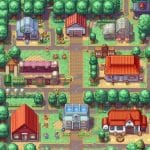
Version 2.0 gives you two original regions outside the Battle Factory. These areas are built around exploration and Pokémon collection. Wild encounters give you a reason to search through different environments and expand your Pokédex. Progression also uses collection milestones and key items to open access to additional areas. Community discussion confirms that Surf is one of the progression rewards connected to exploration.
The exploration mode does not follow the traditional Pokémon formula. You are not simply moving from one Gym to the next. Instead, your progress is closely tied to:
- Finding wild Pokémon
- Registering Pokémon in your Pokédex
- Reaching collection milestones
- Unlocking additional areas
- Discovering hidden information
- Returning to the central hub
- Building teams for the Battle Factory
🧬 200+ Fakemon Form the Heart of the Game
The biggest attraction is the large collection of original Pokémon. The 2.0 release contains more than 200 Fakemon. The designs come from a large group of artists within the Pebbler Platoon community.
The original version already had more than 80 usable Fakemon from over 20 artists. Each Pokémon had a specific battle set, with custom moves, abilities, stats, and held items.
You therefore need to learn each Pokémon rather than rely only on your knowledge of the official Pokédex.
🎨 A Large Community Art Project
Hodgepodge Platoon is also notable for its collaborative artwork. The development credits include many contributors across:
- Fakemon artwork
- Sprites
- Coding
- Maps
- Scripts
- Testing
- Music
- Other development work
⚔️ Battle Factory Is Still Central
The Battle Factory concept was the foundation of the original hack. You receive rental Pokémon instead of building a conventional team through normal training. You can select Pokémon, fight opponents, and swap members as you progress. The system takes inspiration from the Battle Factory in Pokémon Emerald.
The strategy comes from making the best use of what you receive. You need to consider:
- Pokémon typing
- Abilities
- Move coverage
- Held items
- Base stats
- Team synergy
- Opponent weaknesses
- Your available swaps
🔄 Three-Pokémon Teams Change Your Decisions
The Battle Factory section uses small teams rather than the usual six-Pokémon party structure.
That changes how you evaluate a rental. A Pokémon does not have to be powerful by itself. Its value also depends on how well it works with the other two members of your team. You may need:
- One defensive option
- One offensive option
- A Pokémon with useful support moves
- Strong type coverage
- Abilities that complement your other choices
🧠 You Have to Learn a New Battle System
Hodgepodge Platoon contains much more than standard Emerald battle mechanics.
The original project included mechanics, moves, abilities, and items from multiple Pokémon generations. It also contains original mechanics coded specifically for the hack. Some documented examples include:
- Palpitations
- Mist
- Dumpster Dive
- Heart Attack
- Inverse Room
- Ward Spell
- Portent Cast
- Sand Slip
- Purification
The exact behavior of these mechanics can differ from what you know from the official Pokémon games. The game therefore rewards careful reading of descriptions.
📖 Detailed Information Is Available In-Game
The developers anticipated that 200+ unfamiliar Pokémon would be difficult to understand. The game contains expanded information for Pokémon, moves, abilities, and items. The Pokédex also has extended text limits so Fakemon can have more detailed lore.
This means you do not need to memorize everything before you start. You can inspect information as you learn the game. One documented feature also lets you press L while highlighting a move during battle to inspect its dynamic power and accuracy.
🏚️ The Abandoned Areas Give You More to Investigate
The two new regions are not simply larger routes. Their abandoned setting forms part of the game's world-building. You can find:
- Unusual locations
- Wild Fakemon
- Collection clues
- Progression barriers
- Environmental details
- Lore references
🎮 EmulatorJS Controls
Keyboard Controls
- Arrow Keys — Move / select options
- Z — A Button / Confirm / Talk
- X — B Button / Cancel / Run
- A — L Button
- S — R Button
- Enter — Start
- Shift — Select
Mobile Controls
- Virtual D-Pad — Movement
- A — Confirm / Talk / Select
- B — Cancel / Run
- L — Left shoulder function
- R — Right shoulder function
- Start — Open the Start menu
- Select — Select function